The Kyiv Independent Live in London:

Russia sends NATO new nuclear threat over Kaliningrad as tensions rise
 on Google
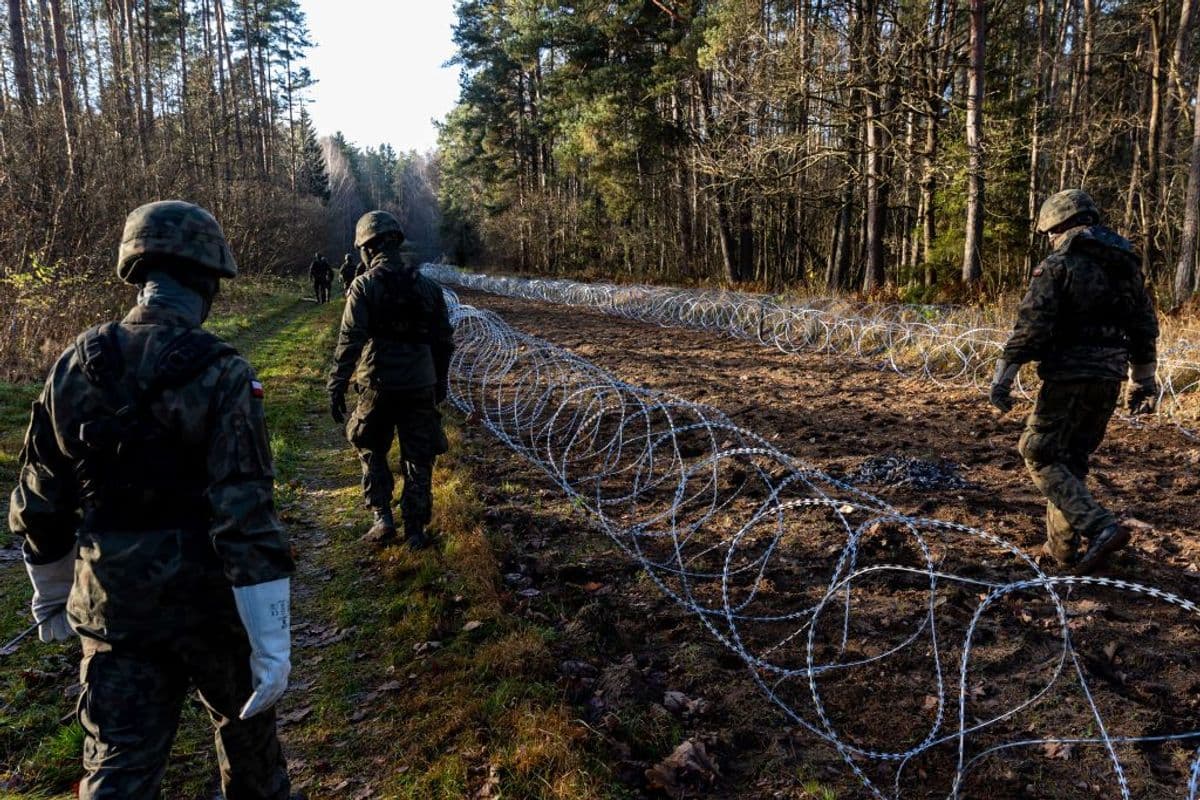
Russia told NATO it would be ready to use nuclear weapons if alliance members attempt to isolate Kaliningrad Oblast, NATO spokesperson Allison Hart told the Kyiv Independent Sept. 30.
The warning came in a Russian non-paper delivered to NATO, which also threatened possible strikes against decision-making centers in NATO member states at the outset of such a conflict. The message adds to renewed Russian nuclear rhetoric toward Europe and warnings over hypothetical military action against the Russian exclave on the Baltic Sea.
"Russia will be ready to use the entire arsenal of forces and capabilities at its disposal, including nuclear weapons, in order to defend its territory should NATO countries undertake any attempt aimed at isolating the Kaliningrad Region from the rest of the country," the note said.
It also raised the possibility of "Russian strikes against decision-making centers in the alliance's member states right from the outset."
Hart rejected the threats, saying that NATO considers itself a defensive alliance and does not view its military activities as a threat to Russia.
"We strongly denounce the threat of force, including any irresponsible nuclear rhetoric. We call on Russia to end its unprovoked war in Ukraine," she said. "Russia's use of hybrid tactics is a sign of desperation. But we will not be dissuaded from our support to Ukraine."
The Russian Embassy in Ireland issued a similar warning on Sept. 30.
The embassy claimed that the European Union and NATO are increasing military activity along Russia's western border, including through military exercises. It also cited what it called "information" that NATO is preparing an air and naval blockade of Kaliningrad Oblast, without providing evidence or identifying the source of the claim.
Kaliningrad Oblast is a Russian exclave on the Baltic Sea, located between NATO members Poland and Lithuania and separated from mainland Russia by Lithuanian territory.
The embassy also pushed back against warnings from European officials that Moscow could be preparing for a military confrontation with Europe, saying there was no basis for such claims.
It cited Russian Foreign Minister Sergey Lavrov as saying that if the West attacks Russia, Moscow would respond with "a completely different war and a very brief one."
Russia has repeatedly used nuclear rhetoric in its confrontation with Western countries over its full-scale war against Ukraine. The U.K. has previously condemned Moscow's nuclear signaling as destabilizing and warned that such rhetoric increases the risk of miscalculation.
Western officials have also raised concerns over what they describe as growing Russian hybrid operations against NATO members, particularly countries on the alliance's eastern flank and those supporting Ukraine.