'Serious destruction' — massive Russian missile, drone attack on Kyiv kills at least 31, injures over 100
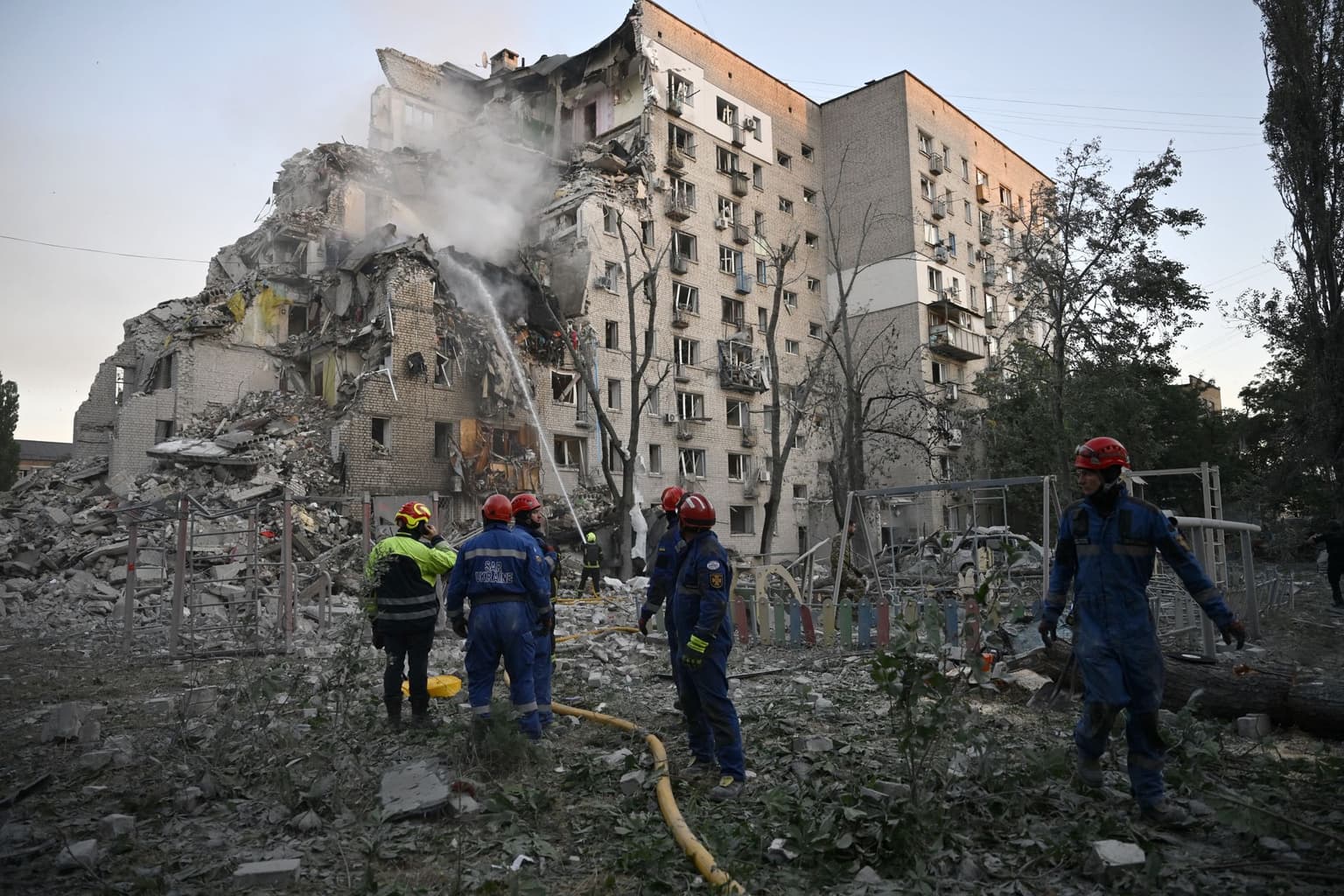
Rescuers extinguish a fire and work in a damaged residential building following Russian missile strikes in Kyiv, Ukraine, on July 2, 2026. (Genya Savilov / AFP / Getty Images)
 on Google
Editor's note: This article was updated with the latest casualty figures.
Waves of Russian missiles and strike drones pummeled Kyiv overnight on July 2, just hours after President Volodymyr Zelensky warned that Russia was preparing another large-scale attack against Ukraine.
Search and rescue operations concluded on July 4, Ukraine's State Emergency Service (DSNS) said. The death toll rose to 31, while 102 people were injured, after rescuers recovered the last victim from beneath the rubble of a partially collapsed multistory residential building in Kyiv's Darnytskyi district.
On July 2, despite widespread destruction and civilian casualties, Kremlin spokesperson Dmitry Peskov claimed Russian forces had targeted only "military or quasi-military targets," adding that Russian leader Vladimir Putin had been briefed on the attack.
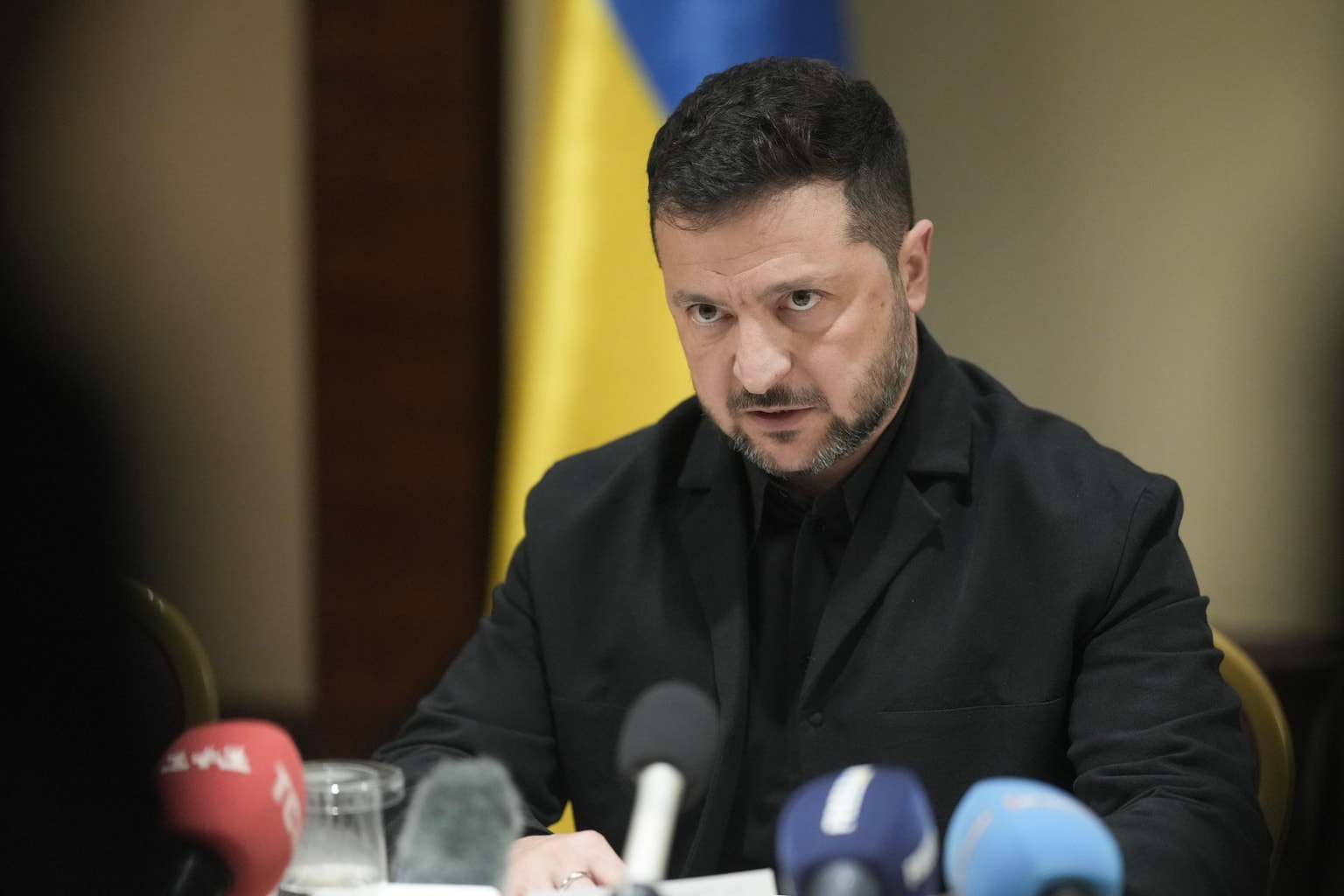
Speaking to journalists at the site of a Russian strike in Kyiv's Darnytskyi district, Zelensky said Russia's attack exposed Ukraine's continuing shortage of air defense interceptors.
"If our partners had delivered what they promised on time, I think we could have saved more homes and, frankly, more lives," he said.
Zelensky said Ukraine would need at least 140 Patriot missiles to intercept an attack involving around 70 ballistic missiles, arguing that Kyiv was not asking for additional commitments but for previously agreed military assistance to be delivered.
"Putin is losing this war," Zelensky added. "That's what's happening. He understands that the only thing he can do is intimidate people and simply kill civilians with missile strikes."
Kyiv Mayor Vitali Klitschko described the attack as the war's "most massive" attack on the capital.
"It was a terrible night for Kyiv," he said, adding there was "damage in all districts of the city." Klitschko said July 3 had been declared a day of mourning in Kyiv. Two of the injured are children, DSNS said.
Ukraine's Air Force said Russia launched 74 missiles and 496 long-range drones during the attack, most of which targeted Kyiv. Forty-eight missiles and 476 drones were shot down or suppressed but 25 ballistic missiles and 12 drones struck 33 locations.
Twenty-eight of the missiles fired at Kyiv were ballistic missiles, a record number for a single attack on the capital, Air Force spokesperson Yurii Ihnat said on national TV.
As of 7 a.m. local time, damage and destruction had been recorded at more than 30 locations across all districts of Kyiv as a result of the attack.
"An ambulance station, a scientific institute, a hotel, and businesses have also been destroyed," President Volodymyr Zelensky said in a post on social media.
DTEK, Ukraine's largest private energy company, said the attack also damaged its energy infrastructure in Kyiv, leaving some residents without electricity. The company said emergency crews were dispatched to the affected sites as soon as the security situation allowed.
The attack also disrupted internet service after damaging equipment belonging to major provider Utels, which connects around 500,000 homes and businesses in Kyiv and Kyiv Oblast. The company said service had been restored in central Kyiv by midday.
"The enemy is once again targeting residential areas and killing civilians. We have very serious destruction and a significant number of victims, including children," Tkachenko said.

Kyiv's metro sheltered a record 52,500 people, including nearly 4,500 children, during Russia's overnight attack, the Kyiv Metro said on Telegram. All 46 underground stations served as bomb shelters during the air raid.
Many residents also sheltered in underground parking garages.
"The moment we stepped out of the underground parking garage, a ballistic missile struck," Hanna Polishchuk, who lives in the residential building next to the one that partially collapsed in the Darnytskyi district, told the Kyiv Independent.
"Everyone immediately ran back inside. There was complete panic. There was such an enormous explosion. It felt as though the whole parking garage was about to collapse, like everything around us was falling apart."
Strikes from all directions
Kyiv Independent journalists initially reported loud explosions and air defense activity in the capital at around 9:40 p.m. local time. Shortly afterward, air defense units were reported engaging drones on the outskirts of the city.
The Ukrainian Air Force warned that groups of Russian drones were approaching Kyiv and other cities, including Mykolaiv, Konotop, and Kherson. About an hour later, it reported additional waves of drones moving toward the capital.
Tkachenko warned that drones were attacking the city "from all directions" and said there was a possibility of continued drone activity and a combined attack in the coming days.
Kyiv residents headed to underground metro stations for shelter, with many remaining underground as strikes continued through the night.

The next phase of the assault began in the early hours of July 2, when ballistic missiles — including hypersonic Zircon missiles — began striking the capital.
At 12:45 a.m., Tkachenko warned of a ballistic missile threat against Kyiv, followed about half an hour later by a similar alert from the Air Force. Open-source monitoring channels reported that Russia had launched up to 10 strategic bombers.
Kyiv Independent journalists on the ground reported loud explosions shortly before 2 a.m., as the Air Force warned that Russian missiles were targeting the capital and other Ukrainian cities. The "unbelievably loud" blasts could be heard even from shelters deep underground.
Fire and rubble in Kyiv
The attack on the capital targeted residential buildings across the city and injured civilians and first responders, local authorities said. Kyiv’s central districts, where museums and universities stand alongside residential neighborhoods, were among the hardest hit.
In Kyiv Oblast, the attack hit Ukrainian publisher BookChef's central warehouse, destroying around 800,000 books, the company said.
"This is years of work by a great many people. Most importantly, all of our people are alive. That's what we're holding on to right now," the publisher said.
The State Emergency Service said fires and extensive damage to residential buildings and civilian infrastructure were reported across multiple districts in Kyiv following the overnight assault.
In the Shevchenkivskyi district, fires broke out at a hotel and on the roof of a seven-story residential building. Based on available footage, the hotel appears to be the Cityhotel Residence in central Kyiv. Several other multistory buildings also caught fire.
The hotel building is a historic landmark of early 20th-century Kyiv architecture.
Daniil Tipikin, a night chef at the hotel, was on duty when the explosions happened. He spoke to the Kyiv Independent the following morning, while the firefighters were still dealing with the aftermath of a roof fire.

"The blast was incredibly loud. At first, I didn't understand what had happened. I thought something had simply fallen, but then it became clear that it was a Shahed (drone). Then the firefighters arrived and started putting out the fire," Tipikin said.
Tipikin added that most guests were already in the shelter by the time of the strike, including foreign visitors. "There were foreigners staying here, including Germans. Most of them later went to the German Embassy," he said. "Some people were scared, but some foreigners, who have lived in Ukraine for more than a year, took the situation in their stride."
Zherska Anastasiia, 20, a resident of Kyiv's Sviatoshynskyi district, said she did not go to a shelter during the overnight attack, hoping to get some sleep before work the next morning.
Although there is a shelter near her home, it takes at least five minutes to reach on foot. "You think you'll manage, that you'll get through the night. But when the explosions start, you wonder whether you should go downstairs, as it's also dangerous to go outside."
During the attacks, she said, it feels as though the missiles are aimed directly at ordinary residents. "When the siren goes off, it feels like you are the target," she said. "You lie there thinking that the missile is flying toward your building. The target isn't infrastructure — it's people."
"When you read the news that another apartment building has been destroyed, you realize it's about civilians. It's much scarier when you understand that the target could be people, not a gas station or some industrial facility."
Despite the fear, Zherska said life in Kyiv continues. Standing near a hotel damaged and still burning after the attack, she said people return to work the following day because they have little choice.
"Every night feels like a lottery," she said. "Each morning you wake up and realize you've survived another day, and you understand that you have to keep living. I'm here today, at work, and I'm sure I'll be here again tomorrow."
In the Holosiivskyi district, a fire broke out in a 16-story residential building.
In the Pecherskyi district, a nine-story residential building was damaged, and a fire covering 200 square meters broke out between the first and second floors.


Six emergency service workers were injured when an ambulance station was damaged overnight.
Elsewhere, a warehouse caught fire in the Obolonskyi district, two houses were damaged in the Sviatoshynskyi district, and a nine-story residential building was damaged in the Desnianskyi district.
Klitschko also reported the collapse of a nine-story building in the Desnianskyi district, saying rescuers were working to extract people trapped beneath the rubble.
Fires were also reported near residential and administrative buildings in the Solomianskyi district.
Bracing for the onslaught
A Kyiv Independent journalist on the ground reported that a shelter in the city's Podil district was much more crowded on this night than during previous attacks, with many residents bringing children and pets to wait out the night.
The people gathered in the shelter listened to drones exploding overhead while reading real-time news updates and waiting for Russia's ballistic missiles to strike.
The Kyiv Independent spoke to Anna Chulinda, 25, who had come to the shelter for the first time since the full-scale war began. Chulinda is from Ukraine's northern Chernihiv Oblast, which is under constant Russian strikes. She usually weathers the attacks at home, in the hallway.
"It's not as if I read the news there and think, 'Oh my God, something's going to happen' whenever I'm in Kyiv," Chulinda said. "I'm the sort of person who thinks it could happen any minute. We have been living in a state of war for four years now, and an attack could happen any day."
"I wouldn't say I'm prepared for it, but you carry on living, and you know it could happen at any moment."
The heightened alarm in Kyiv followed an urgent warning from Zelensky earlier in the day. During a press conference with Irish Prime Minister Micheal Martin, Zelensky said that Russia was preparing for another mass strike against Ukraine.

"Once or twice a week, there are large-scale air strikes. Today, there is worrying news about preparations for yet another such mass Russian air strike. We have relevant intelligence data," the president said.
Zelensky's warning came amid constant Russian strikes on different regions of Ukraine throughout the day, including a glide bomb attack on Kharkiv that killed a 15-year-old boy and injured 32 civilians.
The Ukrainian company West Oil Group (WOG) announced that WOG gas stations in Kyiv and the surrounding region would be closed from 9 p.m. to 7 a.m. beginning on July 1 due to overnight attack threats.
WOG announced similar restrictions on gas stations in Sumy, Chernihiv, Kharkiv, Zaporizhzhia, Dnipropetrovsk, and Kherson oblasts, as well as some facilities in Poltava Oblast.
Russia falls back on aerial terror
Ukrainians have been bracing for a massive attack in recent days, as Russia has pledged retribution for Ukraine's drone strikes on Moscow in June. The large-scale attack brought the reality of drone warfare to the Russian capital for the first time, disabling the Moscow Oil Refinery and exacerbating a nationwide fuel shortage.
The attacks on Moscow, combined with Ukraine's increasingly successful operation against Russian logistics in Crimea, have undermined Russian President Vladimir Putin's claims of battlefield victory — and possibly his grip on power in the Kremlin.
Zelensky has accused Putin of relying on a campaign of large-scale ballistic attacks on Ukrainian cities to make up for Russia's failures on the battlefield.
Russia has adopted new tactics in its mass strikes on Ukraine, launching more ballistic missiles to exploit Kyiv's shortage of Patriot air defense systems and focusing on new, more devastating targets.

Russia's recent mass attacks on Ukraine have not only targeted residential neighborhoods and civilian infrastructure, but also historic landmarks and cultural heritage sites.
A combined attack against Kyiv on May 24 damaged the National Art Museum, one of the oldest and most important museums in Ukraine. The same attack damaged government buildings, the Kyiv Opera Theater, the Ukrainian House, the Valeriy Lobanovskyi Dynamo Stadium, and the Chornobyl Museum.
Russia struck again on June 15, damaging the Kyiv Pechersk Lavra and other cultural institutions in a mass missile attack.
International reaction
World leaders condemned the latest attack and called for increased pressure on Russia through stronger military support for Ukraine and tougher sanctions.
Dutch Defense Minister Dilan Yeşilgöz-Zegerius said Putin's "atrocities know no bounds" and argued that peace could only be achieved by strengthening Ukraine. EU foreign policy chief Kaja Kallas pledged to propose additional sanctions targeting those supporting Russia's military-industrial complex. Moldovan President Maia Sandu also called for greater pressure on Moscow and stronger support for Ukraine.
European Union Ambassador to Ukraine Katarina Mathernovam, who is currently in Kyiv, described the overnight attack as "hell on Kyiv" in a post on social media. She said residents spent the night in bomb shelters as large parts of the city appeared to be on fire, and warned that the death toll was likely to rise.
Around Ukraine
Elsewhere, smaller Russian attacks against Ukraine persisted over the previous 24 hours Zelensky said on July 1 that Ukraine had been under Russia's air attacks "all day."
In southern Kherson Oblast, 3 people were killed in Russian attacks across various settlements over the past day, 45 were injured, including three children, Governor Oleksandr Prokudin said on July 2.
In the northeastern Kharkiv Oblast, two people were killed, 48 were injured in Russian attacks across the region, Governor Oleh Syniehubov said on July 2.
The city of Kharkiv was hit the hardest in the Kharkiv Oblast, as a 15-year-old boy was killed, and 32 civilians were injured in a Russian daytime attack on the city on July 1, Kharkiv Mayor Ihor Terekhov reported. Terekhov said the city was attacked with seven glide bombs.
In Odesa Oblast, two people were killed, and 13 were injured following a ballistic missile strike on the region on June 1, Ukraine's State Emergency Service reported. The attack destroyed two warehouses, the agency added.
In eastern Donetsk Oblast, one person was killed, 10 were injured in Russian attacks, Governor Vadym Filashkin said.
In northeastern Sumy Oblast, seven people were injured in Russian attacks, the regional military administration reported.
Russian attacks on Dnipropetrovsk Oblast injured four people over the past day, Governor Oleksandr Hanzha reported on July 1 and July 2.
In southeastern Zaporizhzhia Oblast, three people were injured in Russia's attacks on the region and the city of Zaporizhzhia, Governor Ivan Fedorov said.